nan lundeen

call of the wild rose

by Nan Lundeen

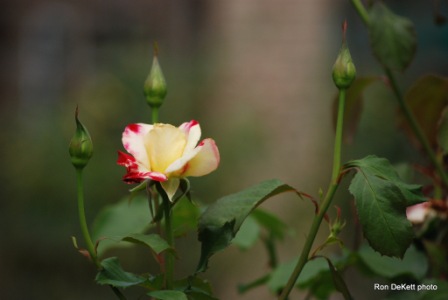
Rose by Ron DeKett
Rose by Ron DeKett

Inspiration or perspiration? Perfection or wild and free?

Thomas Edison’s quote that genius is 1 percent inspiration and 99 percent perspiration is good news for those of us who slog away day after day hoping to unearth gems of inspiration. I’d venture to guess that most poetry and prose writers know that if you want to be a writer you can’t wait for lightning to strike. No, you have to sit down and actually write.

We also know that once we’ve ridden the waves of creative juices and produced a manuscript, even more perspiration is required to edit, rewrite, and polish. But how much to edit, rewrite, and polish? When is it done? I’ve heard writers say when their books were published, they felt relieved because they could stop rewriting.

The other day, my husband I and went to a flower show. There we saw the most perfect white rose in the entire universe! No, really! It was a Mozart symphony all by itself, every petal harmonious with the others. Homogenous perfection, it stood in a glass vase bedecked by a blue ribbon.

Later that day as I remembered the perfect white rose, a wild rose memory washed over me, a childhood memory of pink wild roses tumbling down the shoulders of Iowa gravel roads, perfect in their disarray. A few details, a metaphor, and a simile gave me a poem. Then the pruning began. But not a whole lot. As much as the perfect rose stirs my heart, the wild roses stir my soul. I can breathe near them; the perfect rose makes me nearly hold my breath.

How much do you strive for perfection as you write? As you edit, rewrite, and polish?

At a writing workshop I heard this advice: there’s a time to expand your work and a time to tighten. Sort of like a bellows. Can you visualize them—those contraptions with handles that breathe air onto a fire? Sometimes writing may need a breath of air. Even during editing, rewriting, and polishing, it isn’t always good to tighten, tighten, tighten. A manuscript might need more elucidation, more flights of fancy.

Robert Frost describes beautifully his Faraway Meadow’s anticipated return to wildness after it has been mowed for the last time ever in his poem “The Last Mowing.” He opens the poem by telling us “the talk at the farmhouse” is that “the meadow is finished with men.” He continues to say, “Then now is the chance for the flowers/That can’t stand mowers and plowers.”


The meadow is done with the tame.
The place of the moment is ours
For you, O tumultuous flowers,
To go to waste and go wild in,
All shapes and colors of flowers,
I needn’t call you by name.
 

 What do you prefer—perfection or wild and free? There is a time, I think, to let our words tumble wantonly down the shoulders of roadsides.


The author is grateful to the South Carolina Writers Workshop for first publishing this column in the Quill October 2012.

on being bipolar

My So-Called Crazy Life” will capture your heart and set you to thinking about how our society treats people who suffer from mental illness. Traci Barr puts you right into the shoes of a person with a bipolar diagnosis. Her essay is real because she was diagnosed with the illness 36 years ago. She serves on the Board of Directors of the Greenville Chapter of the National Alliance on Mental Illness. (NAMI). Please “like” and “share” her work and register on our site if you would like to comment. Ms. Barr deserves to be heard.

a sip from the milk jug

What is Moo of Writing? It’s a method of beckoning the muse that works. Best of all, new scientific research confirms connections between relaxation and creativity. Topics for a handbook, Moo of Writing: How to Milk your Potential, burst into my consciousness years ago on a road trip. I created a first draft, and my sister-in-law Cynthia Morgan DeKett drew delightful cartoon cows to illustrate the concept. Now that I’ve retired from a job as a newspaper reporter, I’ve completed the manuscript and am looking for an agent and publisher. Meanwhile, writers who’ve read the manuscript and thoughtfully advised me on improvements, also have been clamoring for it in their hands. I hope you find this article on a few of its concepts helpful to your writing practice. Please register on our site if you haven’t already and comment in the space at the end of the article. Please share how you use relaxation to tap into creativity. Would you like to see the 100-page handbook in print? Thank you and happy writing! Here it is: what is moo of writing?

counting meditation

An easy way to rest your mind and prepare yourself for Moo of Writing is to meditate on your breaths. Lie down or sit with your spine straight and your feet flat on the floor. Focus on your breath. When thoughts intrude, let them drift by like fluffy clouds on a warm summer day. One, inhale, two exhale, three, inhale, four, exhale, five, inhale, six, exhale, seven, inhale, eight, exhale, nine, inhale, 10 exhale. One, inhale, two exhale, continue counting your breaths, beginning over when you reach 10. Enjoy your meditation as long as you like. When you are ready, come back to the here and now.


words of a wise woman

We bring to you today poems by JD, a retired Montessori teacher, a great-grandmother, and an elder whose wisdom I respect. This is the first time JD has shared her poems with the public. She writes of making words and of making bread and of God roaring in the morning, Ever a strong woman, JD writes of Lilith. In one Biblical account of creation, God creates men and women at the same time. Jewish legend names her Lilith who demanded equality with Adam. For those interested in Lilith, I recommend The Lilith Question. JD tells me she would love to see your comments on her work, so please register with our site if you haven’t yet, and comment. Here are links to her poems: november 26, 2012, july, after reading annie dillard, lilith.

a secret to good writing

four ducks in a row by Ron DeKett

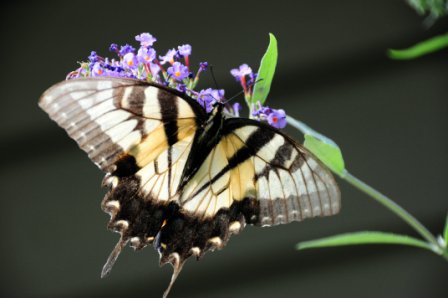
If you want to be inspired on a daily basis, marry a photographer, or at least hang out with one. You’ll get lots of practice truly observing what’s in front of you (and behind you and all around you). Because that’s what photographers do. And hanging out with a photographer provides plenty of time for contemplation (while they are sliding down into a bog to shoot a lovely little green snake and you are sitting on a footbridge, or they are setting up a tripod to shoot Joe Pye Weed and then waiting, waiting, waiting for a lull in the breeze so the photo will be in focus, or they are standing by Lake Placid at Greenville’s beautiful Paris Mountain State Park while you count the ducks). I hope you enjoy Ron DeKett’s photo of a yellow swallowtail and my poem, born of contemplating time, “Dance of the Swallowtails.” Please register on our site if you haven’t already and comment—when do you find contemplation time? Happy writing!

dance of the swallowtails

yellow swallowtail by Ron DeKett

for Ron

August 26, 2012

 You stand on Lake Placid’s shore
viewfinder framing
clear water revealing
fish just hanging out,
four ducks sailing into what was nothing like
a South Carolina August afternoon
because the sun kisses gentle
while breeze lays ripples on wet
like your fingers ruffling my hair at night
when we’re falling asleep;
viewfinder framing
swallowtails—yellow wings flirting with currents,
they dance
circle
bob
tack
do-si-do
to a sound I am sure
means
peace.
…Nan Lundeen


the nature of writing

Where does your Muse like to hang out? Mine relishes nature. My husband Ron and I hiked around Lake Placid at Paris Mountain State Park, Greenville, SC, yesterday. It was one of those rare late summer days when the light already has dipped its angle and a nip in the air whets the taste buds for fall. A waterfall glimpsed through leaves charmed my Muse. This morning, she surprised me with a love poem. I first thought the poem was going to be about falling water and taking care of our beloved Earth—something like, “We are all falling water.” But when a person fills your heart to the brim, you just gotta write a love poem! I love you, Ron. Here it is with the image that beckoned my Muse: “the wheel turns.” Please comment below to share where you most often find your Muse. Happy writing!

hello, groundhog

For my health and for my writing practice, I walk a mile at an outdoor track five days a week. I greet a triangular-shaped pecan tree at one end of the track. “Good morning, tree.” Pink and blue morning glories peek through the fence. They wend their way into a haiku. One day this week, I am startled to see brown fur on short legs scampering through the grass. The fellow ducked under a storm drain cover and peered at me. It seems he wanted to be in a poem, too. Click here to read “Groundhog Day in August.” Please register at the top, right-hand side of this page if you haven’t already. We promise not to share your email address. Happy writing!

groundhog day in august

I am not a groundhog by Nan Lundeen
Brown fur, legs a blur
scurries through tall
grass, goes to ground—
a hole beneath
a storm drain slab.
Round ears
hug his head
like a teddy bear’s.
He didn’t ask for company
this cool August morning
yet
he stares
cautiously wondering.
We are strange companions.
 
–Nan Lundeen

poetry in the park

Middle Tyger Library, Lyman, SC, by Ron DeKett
Here are the promised poems created by extraordinary ordinary people during the Poetry in the Park class I led in July at the Middle Tyger Library in Lyman, SC. Participant Marjorie Garrett wrote after the class, “I was quite impressed with what each person managed to write in such a short time.” I agree, Marjorie! After I told my husband, Ron DeKett, about the poems, he photographed some scenes in the park, which I’ve included with the poems. Click on the link after each poet’s name to read wonderful, spur-of-the-moment creations. Marjorie Garrett, “Whitewater by the Mill,” M.M. Griffin, “River Watching,” Mary Ellen Lives, “The Sign Says,” K.G. McAbee, “Dam,” and Chris Thackston, “Odd Number.” Please register with MooingAround.com at the top of the home page and comment, if you like. We promise not to share your email addresses. Thank you to all who already have registered. You are helping us build a creative community.

a conversation in a bar

standing cowIt’s a joy to bring you a second short story by the talented Mary Ellen Lives. She turns her gaze on a lifetime relationship squirming under the microscope of the Vietnam War. Come sit on a bar stool at the local VFW and listen in on a revealing conversation between Bulldog, Johnnie, and a stranger. Please register on our site so that you can comment. We’d love to hear your feedback, and we promise not to share your email address with anyone. Click here: “The Day He Lied.”

extraordinary ordinary people

grazing laying down cowExtraordinary ordinary people let their talent shine this morning during the Poetry in the Park class I led at the Middle Tyger Library in Lyman, SC. We spent the first hour of the class talking about poetry and the second half, writing poetry. Participants walked outside to mosey about in the wooded park on a busy, rumbling river—the library’s setting. There they observed and mused and “found” poems they came back to class and shared. They blew me away! Every one of the six participants wrote a meaningful poem very much worth sharing. I’ve invited them to submit their Poetry in the Park poems to mooingaround.com. I hope we’ll be able to share them here soon.