nan lundeen

the power of creative collaboration

The book's cover. Photo by Ron DeKett, design by Kristin Toney.
The book’s cover. Photo by Ron DeKett, design by Kristin Toney.

A friend said she likes the cover of my newly printed book, Black Dirt Days: Poems as Memoir, and I promised to share the story behind it that illustrates the power of creative collaboration. My daughter Jennifer came up with the idea of a girl’s toes in black dirt as a cover illustration for the book. Then, as a surprise to me, she arranged a photo shoot with Naomi, a girl who lives next door to her in Michigan. Yes, the book is about growing up in the 1950s in Iowa, and yes, my husband Ron DeKett had to buy bags of black dirt to dump in the Michigan cornfield (that’s called poetic license). Southwestern Michigan soil tends to be a bit sandy, not black like Iowa’s dirt. Naomi all on her own dug a lovely family heirloom dress out of storage for the shoot. Kristin Toney designed the cover using Ron’s photo, and John Adam Wickliffe tweaked it before publication. I’m thrilled with the result. There you go, Rhea Lynn. That’s the story. Visit me at www.nanlundeen.com.

rare and common pleasures

For your reading pleasure—a love affair on the page. Carolyn C. Rice revels in the English language. Her poetry is lush and perceptive. “Lost” is her favorite among her poems—”a secret mischief lost.” Read it and wander with her mentally and metaphorically. “Defining Box” is the story of a blues man painted with words such as “his voice sharper than the broken neck of a whiskey bottle.” Is that a peacock behind the wheel in “Peacock Display?” Carolyn shares a sensuality of expression with her readers in “Strawberry Pleasures” and “Pretty Please.” MooingAround.com begins 2014 with a lover of language extraordinaire.

magical prose

Josette Williams Davison

“Some of the words covered dancing sheets of music, and could barely stay on the pages they were so full of life and longing.” –  Josette Williams Davison.

Josette writes of words and writers, of angels and people, of books and a great man in her essay, “In the Beginning.” She shares her reflections with readers in magical, thought-provoking prose. Click to read “In the Beginning.”

Happy 2014!

Nan Lundeen – www.nanlundeen.com

an impractical writing companion

Jack in Wildflowers by Ron DeKett

This morning as I was making toast I noticed a tiny, tiny, pale spider crawling across the kitchen counter. I was going to capture her and put her outside, which is what I usually do with spiders, but I realized she would quickly die in winter weather. So, I lured her into an empty toilet paper tube and wedged her new house between a table leg and the wall.

Animals make perfect companions for writers. A dog will get you outdoors for a walk and offers unconditional love. A cat brings her own capriciousness into your writing day, often with delight as part of the bargain. If nothing else, animal companions add a dimension to a writer’s life that is outside the human experience and thus, valuable.

Not all animals make perfect companions, however. Being hidden away in her toilet paper tube, the little spider is unavailable to provide an ear when I’m reading a new poem aloud. Jack, our yellow Lab who passed away this year, used to listen intently. He was wonderfully cuddly. I imagine if I try to snuggle with the little spider on the couch, I’ll quickly lose her in sofa cushions if I can find her to begin with. As far as a leash goes—probably not practical, and if my neighbors saw me walking down the street gently carrying and conversing with a toilet paper tube, well . . .

For now, Bailey, the fuzzy white dog across the street, lets me rub her and gives me kisses. Oliver, a neighbor’s black cat comes to meow and be petted when I step outside mornings. He and Jack used to rub noses, but he seems quite content with human greetings. A silky border collie named Shadow often greets me at the track where I walk. She makes my day.

When you’re a writer, solitude is a splendid gift and often a rare one. Solitude gives a writer time to think, to ruminate, to contemplate, to observe, to study, and to write. Now that I’m retired from the world of journalism, it’s an enormous blessing to be writing away and not be interrupted. You can hear your own writing. For many writers, interruptions can’t be avoided, especially when they involve young children, a spouse, a partner or another family member or good friend. Unfortunately if you believe you shouldn’t feel frustrated, you heap more frustration upon your keyboard which sits abandoned.

An animal friend or two, however, is the perfect companion—I’ll let you know if a whole family of tiny spiders comes marching out from behind our table next spring.

Thank you to all mooingaround.com readers and contributors, and to Adamy Damaris Diaz of Artistik Dreamlife LLC (and a cat lover) for administering the site. We had a great start-up year, and I appreciate all of you. Please contact us with your thoughts and inform us if you have writing to share. Let us continue to build a creative community.

May 2014 bring you solitude and companionship.

Nan Lundeen – www.nanlundeen.com

let’s celebrate this writer’s win!

Mary Ellen Lives
Mary Ellen Lives

MooingAround.com contributor Mary Ellen Lives won the Penn Cove Literary Arts Award for her humorous short story, “A Damn Good Funeral.” Here’s an interview she gave us:

What were your feelings when you learned you won?

“I was and am ecstatic! Even though this is not a highfalutin contest it pays, and this is the first time anyone has given me any money. I have to say, though, that I get excited even if they don’t pay. Just publish me!!”

How do you choose what contests to enter?

“I generally don’t enter them if they charge. Some of these contests are way out of line and I can get rejected for free all day long.”

How many things do you send out per month?

“I try to get a couple out a month. Right now for instance I have four out for review. Two of those have to be exclusive so that takes those stories off the market. (These are short stories only. I also have the novel out to one contest and one publisher.) I just had two stories rejected so I will be sending those back out when I figure out where I want them to go. That takes a lot of time.”

What advice do you have for writers submitting to contests and/or to publications?

“Do your research. I know, everyone says that but it’s really true. Spend the time to read what the mags are looking for. And expect a lot of rejections. Even if it is what they are looking for. Get down about it for a day, then get over it and move on.

“Don’t just send to paying magazines or print magazines. Send work to university presses and others who don’t pay in anything and don’t look down at online only sites. They all give encouragement and exposure. The two things every writer needs.”

Congratulations, Mary Ellen. Your win is our encouragement.


a holiday anthology from hub city press

Josette Williams Davison reads from Imagine a Snowflake

Josette Williams Davison’s kids post themselves at windows reporting, “No snow yet, Mama, only leaves falling.” Bertice Teague Robinson writes of evergreens, clementines, country ham and memories of the young and old as her family gathers before the hearth of her rambling Southern home. Crystal Tennille Irby remembers the powerful and the holy present as Black church women teach their children how to honor the Christ Child. And Susan A. Sistare celebrates what she calls her “Hannumas House,” her home where people play dreidel games, light the menorah, eat latkes and Christmas cookies and enjoy her Christmas trees. These stories and more by 34 Spartanburg, South Carolina, writers are found in Hub for the Holidays: Spartanburg Writers on Christmas newly published by Hub City Press. Their sharing is a wonderful way to build community. Congratulations to the writers and this nonprofit press for a fun and meaningful anthology. Visit Hub City. org.

my pail runneth over

cowGraduate

My family will print my chapbook, Black Dirt Days: Poems as Memoir, in honor of my 70th birthday. Awesome! I empathize with Cynthia Morgan’s drawing of this “Mu Cow” who has graduated from a Moo of Writing class and whose milk pail runneth over. My daughter Jenny, her husband Jim, my son Jeff, and my husband Ron, told me the news and revealed the book cover when we were all together at my daughter’s house in Michigan this month. What a gift! To see the cover visit www.nanlundeen.com.

And more awesome news–the pending publication of my handbook, Moo of Writing: how to milk your potential, received a boost from Writing Magazine in the UK who published my article, “Find Your Moos,” in its December issue. The editor has written me a lovely blurb for the cover of my handbook which will come out early 2014.

What a Thanksgiving for me this year. I am grateful.


poems by Traci Barr

A Jersey gal taps her Southern roots and shares her take on Geechee red peas, sweet tea, barbecue and Frogmore stew, too in two poems, “Covered Dishes,” and “Verna.” She writes about Southern cooking as the mother of cuisine, but she’s not quite sure what y’all are really thinking when you bite into her genteel pimento cheese spread and say, “Bless your heart.”

powerful details

Mindfulness is a big buzz word these days. Used to be called awareness. No matter what you call it, both or either come in handy for writers. We need to pay close attention to detail. That means walking around in our lives with eyes and ears open, noses and taste buds alive. In a writing class, someone read a description of an explosion. The teacher asked, “Did it really boom? If it was in a ditch as you described, would it sound muffled?” That kind of explicit detail brings writing alive. I offer you examples I’m fond of in “the power’s in the details.” Please register on our site if you haven’t already and share details that have come to your attention lately.

the power’s in the details

By Nan Lundeen

The power’s in the details whether you’re writing poetry or prose.

Carolyn Miller describes women who wore white wool sorority blazers and “white bucks with white crew socks rolled down once” in her essay, “Arts and Science,” published in The Missouri Review.

Miller gives us one enormously telling detail—that the sock was rolled down once. She manages to paint an entire milieu with that one detail. Woe to the sorority girl who rolled down her socks twice at the University of Missouri in 1959.

In her poem “Eggs,” Sharon Olds describes her daughter cracking shells, sliding three yolks into the bowl, “slit them with the whisk, beat them till they hissed.”

The power of Olds’s “Eggs” lies in the sound, hissed. The reader understands that those eggs were being thoroughly beaten!

Charles Dickens regales us with his usual brilliance as he describes a moment during Scrooge’s tour of London with the Ghost of Christmas Present. Here are food descriptions: “great, round, pot-bellied baskets of chestnuts,” and “ruddy, brown-faced, broad-girthed Spanish onions.”

Reading Dickens is like smelling and tasting Victorian London.

Eudora Welty begins her memoir, One Writer’s Beginnings, with a memory of the house in Jackson, Mississippi, where she was born in 1909. “We grew up to the striking of clocks,” she wrote. She describes a “mission-style oak grandfather clock” that stood in the hall and “sent its gong-like strokes” throughout the house even to the sleeping porch where “midnight could wake us up.”

Welty’s striking clocks place you in her childhood home.

Nobel laureate Orhan Pamuk juxtaposes details of the mundane with a dramatic moment in his novel, Snow. An exiled poet traveling as a journalist visits the town of Kars, Turkey. He is researching suicides of girls forbidden to wear head scarves and describes how a sixteen-year-old girl had eaten an evening meal with her family. She cleared the table with her sisters, “giggling and tussling,” and went to get dessert. She then went into her parent’s bedroom and “shot herself with a hunting rifle.”

Pamuk’s matter-of-fact details contrasting with the suicide not only places the reader in the scene, but feeds our curiosity just as it feeds the exiled poet’s. The scene is powerful.

Sandra Redding describes the death of a husband in her story, “Tin of Tube Rose.” A couple are sitting in their living room watching “Charlie’s Angels” when “an empty can of Budweiser came rolling right over to my foot.” When the narrator looks over at her husband Ed in his recliner, she sees him “slumped down just like all the air had been let out.”

I’m not sure what to make of Redding’s rolling beer can, perhaps like Pamuk’s writing, the juxtaposition of the mundane with the dramatic creates a memorable image. Her simile “like all the air gone out of it,” is so apt it hurts.

Have fun choosing potent details for your writing!

Nan Lundeen

The author is grateful to the SCWW’s Quill for first publishing this column.


honoring our mentors

Eternity by Nan Lundeen

Who is your mentor? Message me on Facebook or contact us through the “contact us” link on this site to let me know if you’d like to share thoughts about your mentor on MooingAround.

Jenny Munro honors her mother in her poem, “the typist.” I love how Jenny uses sound—the tap, tap, tap of her mother’s typewriter. Jenny draws a word portrait of her—”Concentrating, with her tongue caught between her teeth,” and shares a few things she learned from observing her role model.

My mentor, Sylvia Barclay, whom I knew in the 1970s in Muskegon, Michigan, generously shared writing wisdom. Whenever I asked how I could repay her she would say, “Pass it on.” That’s what I aim to do with my handbook, Moo of Writing. I was in Muskegon’s library on a hot July day when the sky turned dark. Solar eclipse. I discovered, Sylvia had passed away about the time of the eclipse, which her students found appropriate. A day or two later, I took a yoga class and meditated for the first time. Sylvia stood in my mind’s eye, her mouth pursed in a familiar expression under one of her offbeat hats. Oh, an opportunity to learn what was on the other side. “What’s it like there?” I asked. “Love is all you need to know for now, Nan.” I thought she meant I’d learn more about the afterlife in this lifetime. Hasn’t happened yet. What a gift she gave me. Love really is all I need to know.


hot first lines

Contemplating great first lines of literature
Contemplating great first lines of literature.
Photo by Nan Lundeen

Hey! Grab me by the throat and throw me down. Is that an irresistible first line? Again and again we have read writing advice that the first line must grab the reader. But how? Click “what makes a grabby first line?” to gather a few tips. You make us happy when you register and comment on our site because we’re all about building a creative community. Please join us. Welcome!

what makes a grabby first line?

by Nan Lundeen

Whether writers of poetry or prose, one challenge grins at us like the Cheshire Cat—now you see it now you don’t—the arresting first line.

What makes a line that’s memorable in the best of times and the worst of times?

Jane Austen launches Pride and Prejudice with a summary sort of line that also hints to the reader of her acerbic wit to come: “It is a truth universally acknowledged, that a single man in possession of a good fortune, must be in want of a wife.”

Sometimes the quirky suffices. For instance, “Bird-watching can be dog-eat-dog.” Who could resist reading that? The profile of a bird watcher extraordinaire by Karen Uhlenhuth was published in the Kansas City Star Magazine and compiled in an anthology of the best American sports writing of 1992.

I’m a huge fan of the late Robert B. Parker. Here’s his first line from Small Vices: “The last time I saw Rita Fiore she’d been an assistant DA with red hair, first-rate hips, and more attitude than an armadillo.”

A scene can entice you as in the first phrase of Maxine Kumin’s poem “Cross-Country Skiing.”

I love to be lured under the outstretched wings

of hemlocks heavily snowed upon, . . .

And what of a simple, rhythmic line demanding attention such as Longfellow’s, “Listen, my children, and you shall hear…”

On a dark and stormy night particularly, a spot of humor can reel a reader in, as in Amy Tan’s memoir that begins, “Soon after my first book was published, I found myself often confronted with the subject of my mortality.”

OK, I guess that qualifies toward a curiosity quotient, which I confess is my favorite lead into anything. Another example that rings my curiosity bell—George Orwell’s ” It was a bright cold day in April, and the clocks were striking thirteen.”

In the Amy Tan example, humor enters with her next sentences: “I remember being asked by a young woman what I did for a living. ‘I’m an author,’ I said with proud new authority.

“‘A contemporary author?’ she wanted to know.”

Perusing first lines, I came upon one that tops my list. Holden Caulfield begins straight off with, “If you really want to hear about it, the first thing you’ll probably want to know is where I was born, and what my lousy childhood was like, and how my parents were occupied and all before they had me, and all that David Copperfield kind of crap, but I don’t feel like going into it, if you want to know the truth.”

It’s the voice. And that may be the bottom line for me in exploring what makes a great first line. Whether it’s exposition or first-person or whatever, it’s voice that hooks me. I realize that here’s a writer I’d like to sit with awhile.

What’s your favorite first line?

The author is grateful to the SCWW Quill that first published this column.

memorable rejections

After five years of continual rejections, Agatha Christie lands a publishing deal. Her sales now number $2 billion. Only Shakespeare has sold more.

J.K. Rowling’s literary agent receives 12 publishing rejections before the eight-year-old daughter of a Bloomsbury editor demands to read the rest of Harry Potter and the Philosopher’s Stone. The editor agrees to publish it but advises the writer to get a day job.

“Too different from other juveniles on the market to warrant its selling”—rejection sent to Dr. Seuss.

“Anthologies don’t sell was the gist of 140 rejections sent to authors of Chicken Soup for the Soul, which sold 125 million copies.

“I recommend that it be buried under a stone for a thousand years,” was advice given to Vladimir Nabokov whose Lolita has sold 50 million copies.

“The girl doesn’t, it seems to me, have a special perception or feeling which would lift that book above the ‘curiosity’ level,” reads a rejection of The Diary of Anne Frank.

All of these stories and more are found at literaryrejections.com. The site is a fun read.

I like author May Sarton’s advice to writers: “Hold on, trust your talent, and work hard.”

Here’s another quote, this one from 64-year-old Diana Nyad who conquered the 110-mile swim from Cuba to Florida on her fifth attempt: “We should never, ever give up.”

And a Nyad quote for those of us still writing after “all these years,” –”You never are too old to chase your dreams.”

Nyad said that swimming “looks like a solitary sport, but it’s a team.”

You could say the same about writing. Writing buddies are invaluable, especially when the rejections roll in. Believe in yourselves, writing buddies. We believe in you.

How do you handle rejections? Please register on the site so that you can comment below. If you have trouble registering, please contact us. Thanks and happy writing!


writing wild

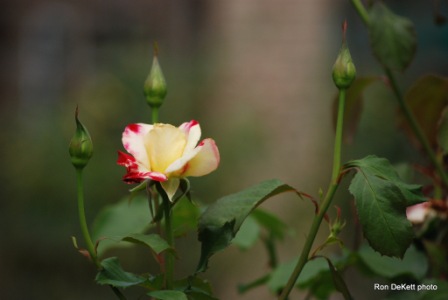
Rose by Ron DeKett
Rose by Ron DeKett

Are you a wild rose kind of writer? Or would your rose take first place at a flower show? If you’re lucky, you’re both. I tend toward the wild side of writing, at least in my dreams. And yet, I spend countless hours ensconced in my comfortable writing room chair—the one covered with the star quilt Gram made me when I was a kid in Iowa—rewriting and perfecting manuscripts. The thing is, perfection is more of a dream (read impossible) than choosing the wild rose way. What do you think? Click here to read “Call of the Wild Rose” and comment, if you so choose. I’d love to read your thoughts.